
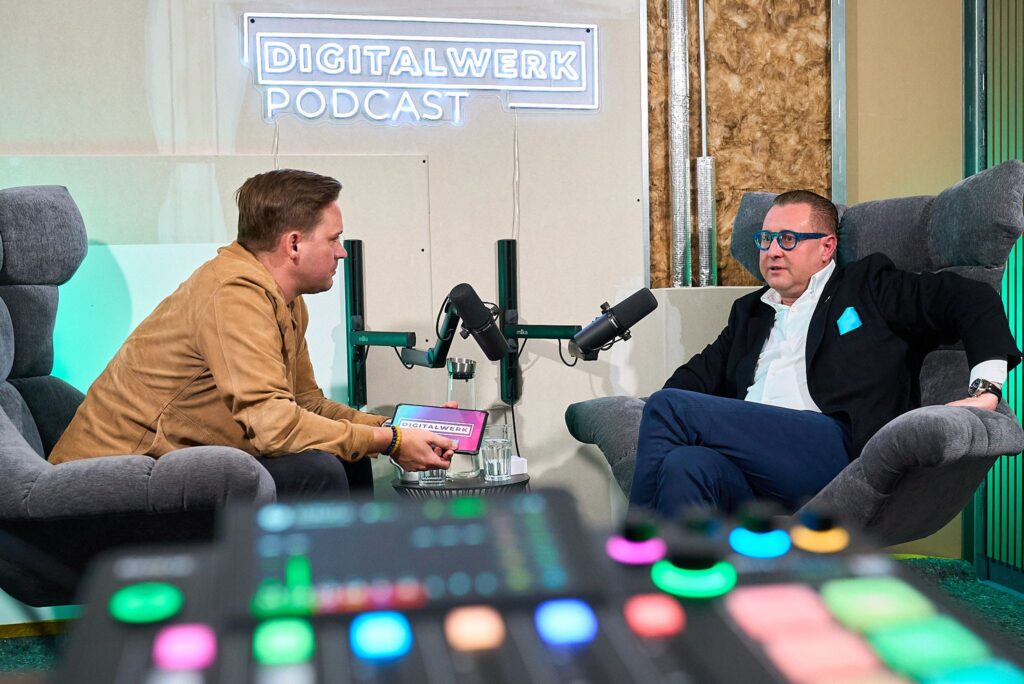
Thomas Podstawski, CEO of Podstawski Group and Leader of Activ Investment, analyzes the phenomenon of the Polish real estate market in his latest podcast. Why can housing be built in Poland at up to half the cost of Germany? The answer lies not in materials, but in the system.
Poland attracting attention across Europe
In the podcast, Thomas Podstawski highlights a trend that is increasingly capturing the attention of Western media, investors, and real estate experts: the exceptional efficiency of Poland’s residential construction sector.
At a time when many Western European countries are struggling with rising development costs, excessive bureaucracy, and economic slowdown, Poland is strengthening its position as a dynamic, competitive, and efficiently operating market.
Where do lower construction costs come from?
One of the most striking conclusions of this analysis is that residential projects in Poland can be delivered at up to half the cost observed in Germany. As Podstawski emphasizes, this is not the result of any “magic” or significantly cheaper construction materials. Steel, concrete, and construction chemicals are priced very similarly on both sides of the border. Differences in raw material costs are marginal and do not explain such a large gap in total investment costs.
The true source of Poland’s advantage lies in work organization, operational efficiency, and the structure of the entire development process. The Polish construction market operates faster, more efficiently, and with significantly lower administrative burden. In practice, this means that the same construction tasks can be completed with fewer labor hours, while projects are not delayed by excessive procedures, certifications, or administrative barriers. This focus on results rather than overregulation translates directly into real cost savings.
The fiscal environment also plays an important role. The Polish system offers solutions that enhance the competitiveness of residential developments. Combined with faster project delivery, this enables developers to operate more efficiently and respond more flexibly to market needs. From an investor’s perspective, this means better project conditions; from a buyer’s perspective, greater housing availability.
Podstawski also points to social and cultural factors. Over the years, the Polish market has developed based on high levels of professional activity, entrepreneurship, and a strong focus on growth and financial independence. This mindset translates directly into the construction sector. Where speed, organization, and efficiency are key, the Polish model proves to be particularly resilient and productive. As a result, the Polish real estate market not only continues to grow dynamically but also remains attractive to both homebuyers and investors
Market security strengthens customer confidence
Another important pillar of the Polish model is market security. In recent years, regulatory solutions have been introduced to enhance consumer protection and stabilize the development sector. As a result, the residential market in Poland is now perceived as more structured and reliable. For buyers, this means greater confidence; for the industry as a whole, a higher level of trust that supports long-term growth.
The approach to apartment design and sales is also significant. Over time, the Polish market has developed a model that responds to real customer needs. Units are designed with functionality in mind, floor plans are better optimized, and the widely adopted developer standard allows buyers to finish their apartments according to their own budget and preferences. This solution both lowers the entry cost of purchasing real estate and provides greater flexibility and control over the final outcome.
Time is another critical factor. In real estate, speed is one of the most valuable resources. The shorter the administrative and construction process, the lower the financing costs and the higher the capital efficiency. This is where Poland stands out particularly strongly. More efficient procedures and shorter project timelines allow developments to be executed in a more predictable and competitive manner than in many Western European markets.
The Polish construction model as an inspiration
According to Thomas Podstawski, the success of Poland’s residential construction sector is no coincidence. It is the result of a pragmatic approach, a well-organized development process, greater flexibility, and a strong sense of responsibility among all market participants. Poland demonstrates that it is possible to build safely, quickly, and efficiently while maintaining high growth dynamics.
The growing interest in the Polish real estate market among international observers is therefore not surprising. At a time when many economies are searching for ways to restore competitiveness, Poland stands out as an example of how to combine reasonable costs, operational efficiency, and real growth potential. It is a model that not only attracts attention but may also serve as an inspiration for other European markets.
Link do całego podcastu: